Before They Have Words: Naming Feelings from the Very Beginning
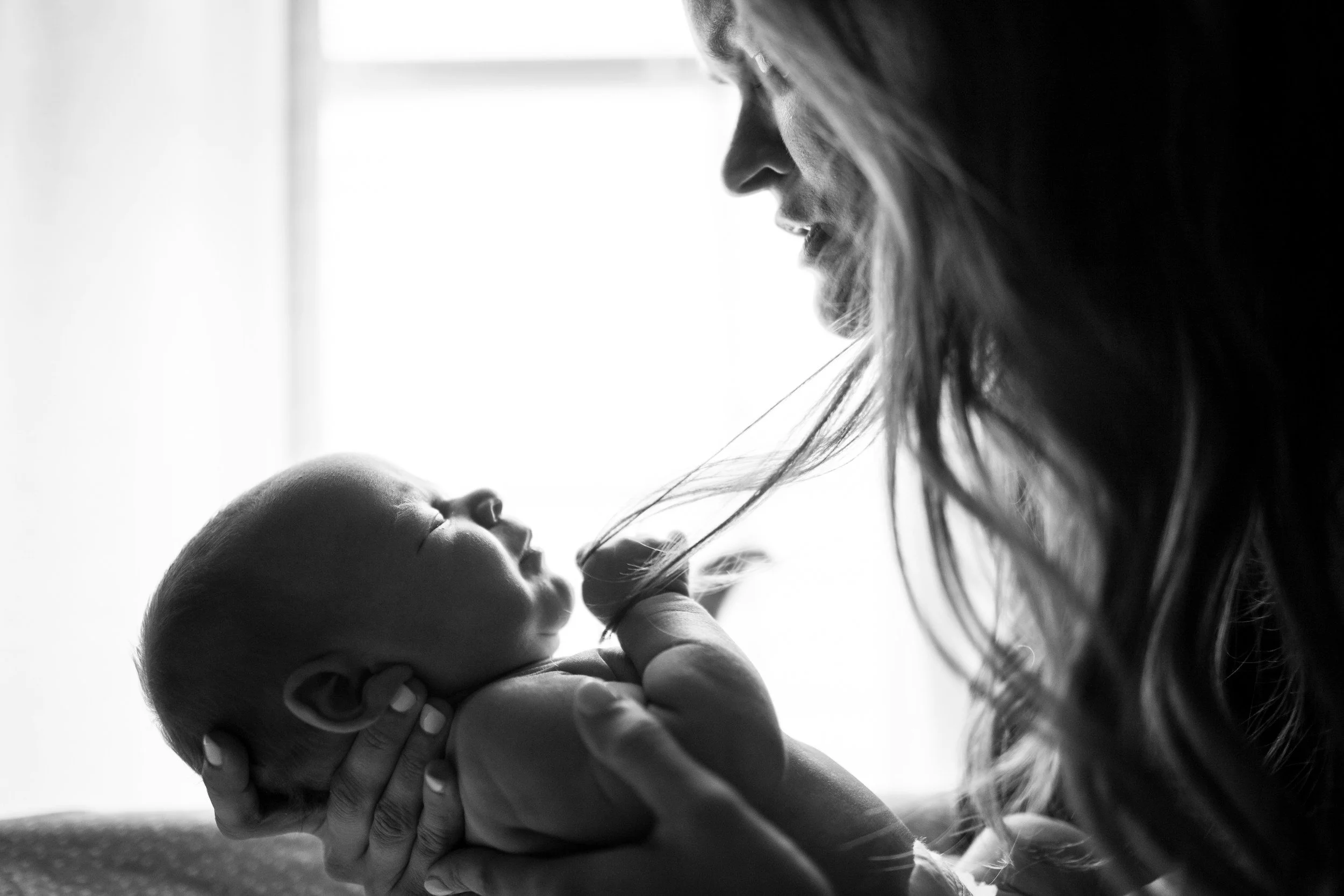
There is a particular kind of crying that seems to come from nowhere — too big for the moment, too big, it seems, for the small body producing it. Parents often describe feeling helpless in these moments, unsure whether to soothe, distract, or simply wait it out. But there is another response available, one that psychoanalytic thinking has understood for decades: you can name it.
Long before a child has language, they are having experiences. Sensation, discomfort, overstimulation, longing — these arrive without words attached, and it is often the caregiver who provides the words first. You're overwhelmed. That was too loud. You're frustrated because you wanted to keep going. The feeling doesn't wait for vocabulary to become real. It is already real. What language does is something else entirely — it tells the child that the feeling has been recognized, that it is nameable, and that someone else was present with them inside it.
The Unconscious Begins Early
Psychoanalytic theory has long held that emotional life and association begin well before verbal memory does. We do not remember our earliest months in narrative form, but we are shaped by them nonetheless — by tone, by rhythm, by whether our internal states were met with attunement or with absence. This is the foundation of what British Object Relations theorists described as the earliest relationship: not a relationship of words, but of presence.
When a caregiver names a feeling before a child can name it themselves, something important is being transmitted. It is not just comfort in the moment. It is the beginning of a lifelong capacity — the ability to locate, tolerate, and eventually articulate one's own internal experience, rather than being flooded or overwhelmed by it without recourse.
What Happens When Feelings Go Unnamed
Many adults who come to therapy are, in a sense, still waiting for this to happen. They arrive able to describe events with great clarity but struggle to locate what they actually felt — or they feel intensely without being able to identify why, or what to do with the intensity. Often, this is not a failure of intelligence or insight. It is a reflection of an earlier absence: feelings that were never named, and so were never fully known.
In therapy, part of the work is exactly this — offering language to experience that has gone unspoken, sometimes for a lifetime. A client will describe a sensation, a reaction, a pull toward withdrawal or anger, and the work involves sitting with it together until it can be named. That sounds like grief. That sounds like fear of being truly seen. The relief that follows is rarely dramatic. It is quiet, and it is often the first time that particular feeling has been witnessed by another person.
Naming Is Not Correcting
It is worth noting what this practice is not. Naming a feeling is not the same as fixing it, minimizing it, or rushing a child — or an adult — toward calm. "You're upset" is not an instruction to stop being upset. It is an acknowledgment that what is happening internally is real and has a shape. This distinction matters enormously. A feeling that is named is a feeling that has been made bearable, not a feeling that has been dismissed.
This is, in many ways, the quiet work of both early parenting and psychoanalytic therapy: to sit alongside another person's internal experience, without rushing to change it, and to offer the words that allow it to be held rather than simply endured alone.
A Continuous Thread
Whether in infancy or adulthood, the principle remains the same. Emotional life exists before — and often beneath — the words we eventually find for it. The presence of another person who can name what is happening, gently and without judgment, is part of how we come to understand ourselves at all.
This is not a technique so much as a way of listening. It asks us to trust that feelings, even unformed ones, deserve recognition — and that being truly seen, at any age, begins with someone else finding the words first.